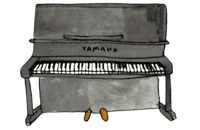

Does a used Yamaha piano hold its value?
The short answer
A good used Yamaha usually holds its value well, and some have gone up in price over the years. I wouldn’t call it an investment in the way you’d think of shares or a savings account, though. It’s closer to money you’ve parked somewhere safe while your child learns, with a good chance of getting most of it back later.
A brand new piano loses around a fifth of its value as soon as it leaves the showroom, much like a new car. A used Yamaha has already taken that drop. If you buy a good one at a fair price, you’re starting from a much safer place if you ever decide to sell it or trade it in.
Why Yamahas keep their value
The first reason is how they’re made. Yamaha built the U1 and U3 uprights, and the C1, C2 and C3 grands, in Japan in very large numbers and to a consistent standard. When one has been looked after, a piano from the 1980s can still play beautifully today, and buyers know that.
The name helps too. A lot of piano teachers learned on a Yamaha, and many schools, colleges and exam centres use them. Plenty of buyers want the same model they learned on themselves, so someone is nearly always ready to buy a good one.
There’s also a limit on supply. Only so many well kept Japanese Yamahas exist, and dealers from around the world compete to buy them. Growing demand from China and changes in the exchange rate have both pushed up what those pianos cost. We’ve imported almost 4,000 pianos from Japan since 2003, and those pressures haven’t gone away.
What our own sales show
We can point to real examples from our own records. On our page answering do Yamaha pianos increase in value? we show three Japanese U3s that later sold for between 25% and 75% more than they first cost, somewhere between six and fourteen years after the original sale.
That’s encouraging, but three pianos are a small sample and I wouldn’t want anyone to read them as a guarantee. Prices in general rose over the same years, so the fairest way to put it is that these pianos kept pace with the cost of living rather than making their owners a profit.
What decides what a used Yamaha is worth
- The model. The U3 and the C series grands tend to fetch the most, with the U1 not far behind. Entry level models, and some Yamahas built outside Japan, usually hold less of their value.
- Its age. Every Yamaha has a serial number, normally found inside the lid, that tells you the year it was made. You can look yours up on our Yamaha piano serial numbers chart. Condition matters more than age, but if the year is wrong the price will be wrong too.
- Its condition. Worn hammers, a piano that won’t stay in tune, or a damaged case will all bring the value down. Tuning it regularly and keeping it away from radiators and sunny windows will help protect it.
- Who buys it. You’ll rarely get a shop price when you sell privately, and that surprises a lot of people. Someone buying from a shop also gets delivery, tuning, a warranty and the right to send it back, and a private buyer gets none of that. Expect a private sale or a trade-in to come in well below what the same piano would be advertised for in a shop.
What this means if you’re buying
I’d always say buy a piano because your child will enjoy playing it, and treat any money you get back later as a bonus. With a good Yamaha, the real question is how much you might lose, and in most cases the answer is not very much.
A few sensible steps will help you keep as much of its value as you can.
- Choose a Japanese made U1, U3 or C series grand from a seller who tells you its serial number and the year it was made.
- Pay a fair price. Compare like with like, meaning the same model at a similar age, rather than going for the cheapest one you can find.
- Have it tuned once or twice a year and keep the receipts, because anyone buying it from you later will want to know it’s been looked after.
- Ask about trade-in terms before you buy. If you upgrade with us within five years, we’ll give you the full price you paid back as credit, and after that we offer part-exchange.
If your child loses interest or moves on to another instrument, a well kept Yamaha is one of the easiest pianos to find a new home for. That’s a big part of why so many families choose one as their first serious piano.
Thanks, Mark & Julie Goodwin.
Created: 29 September 2026
Modified: 29 September 2026