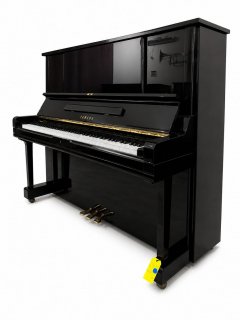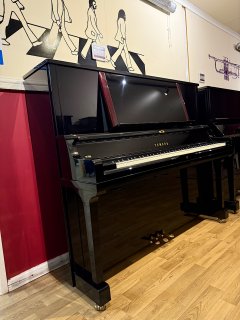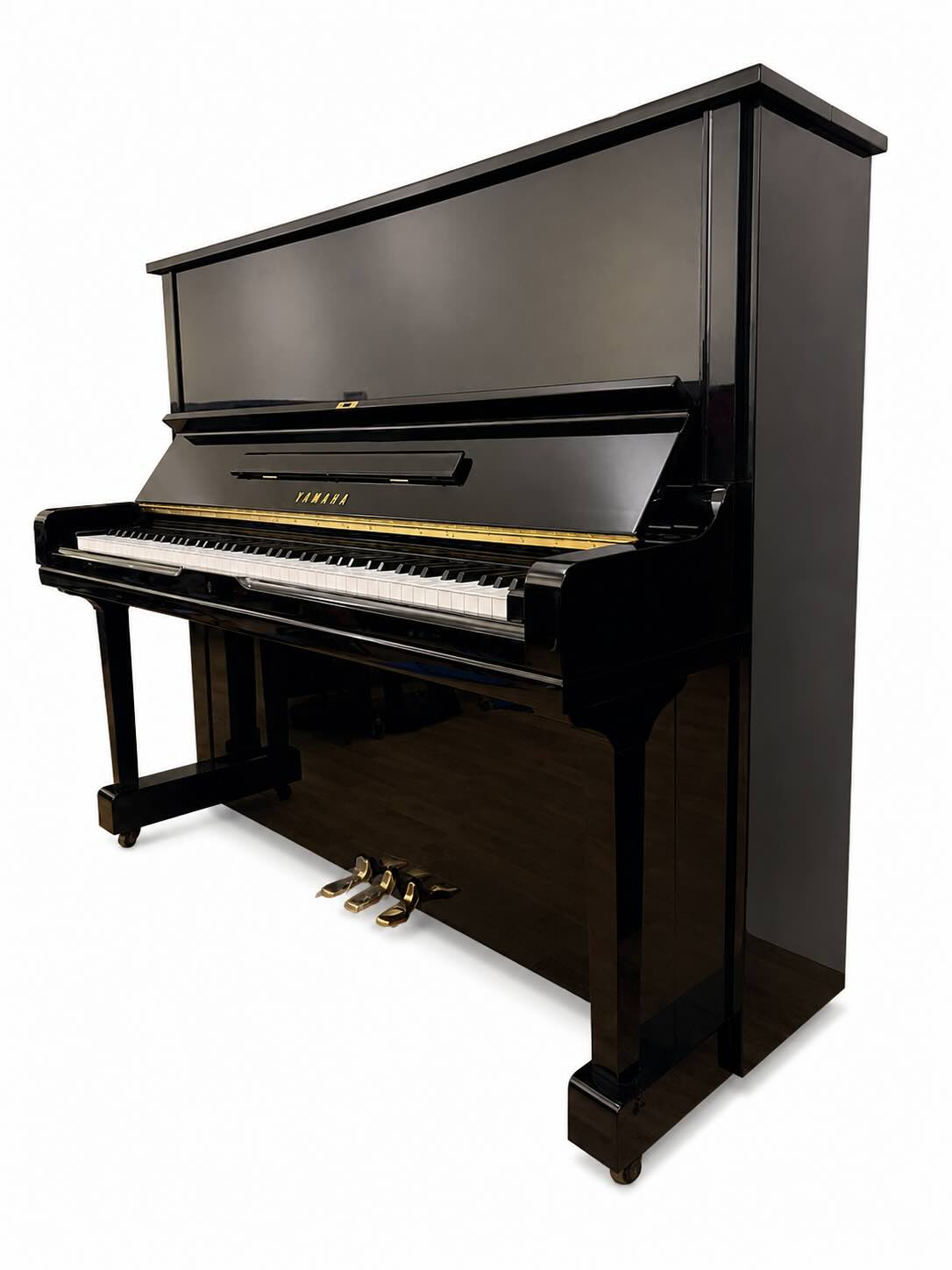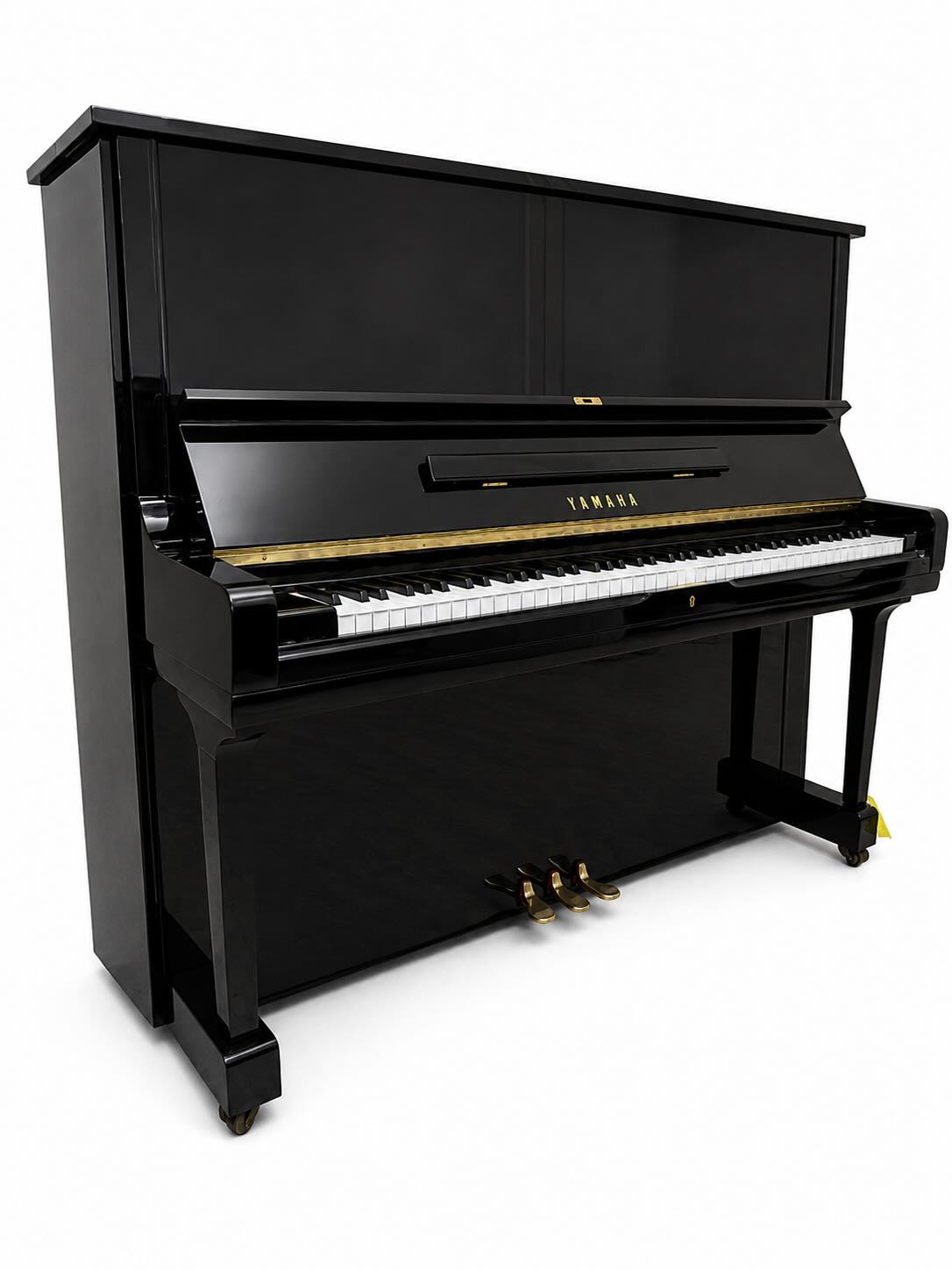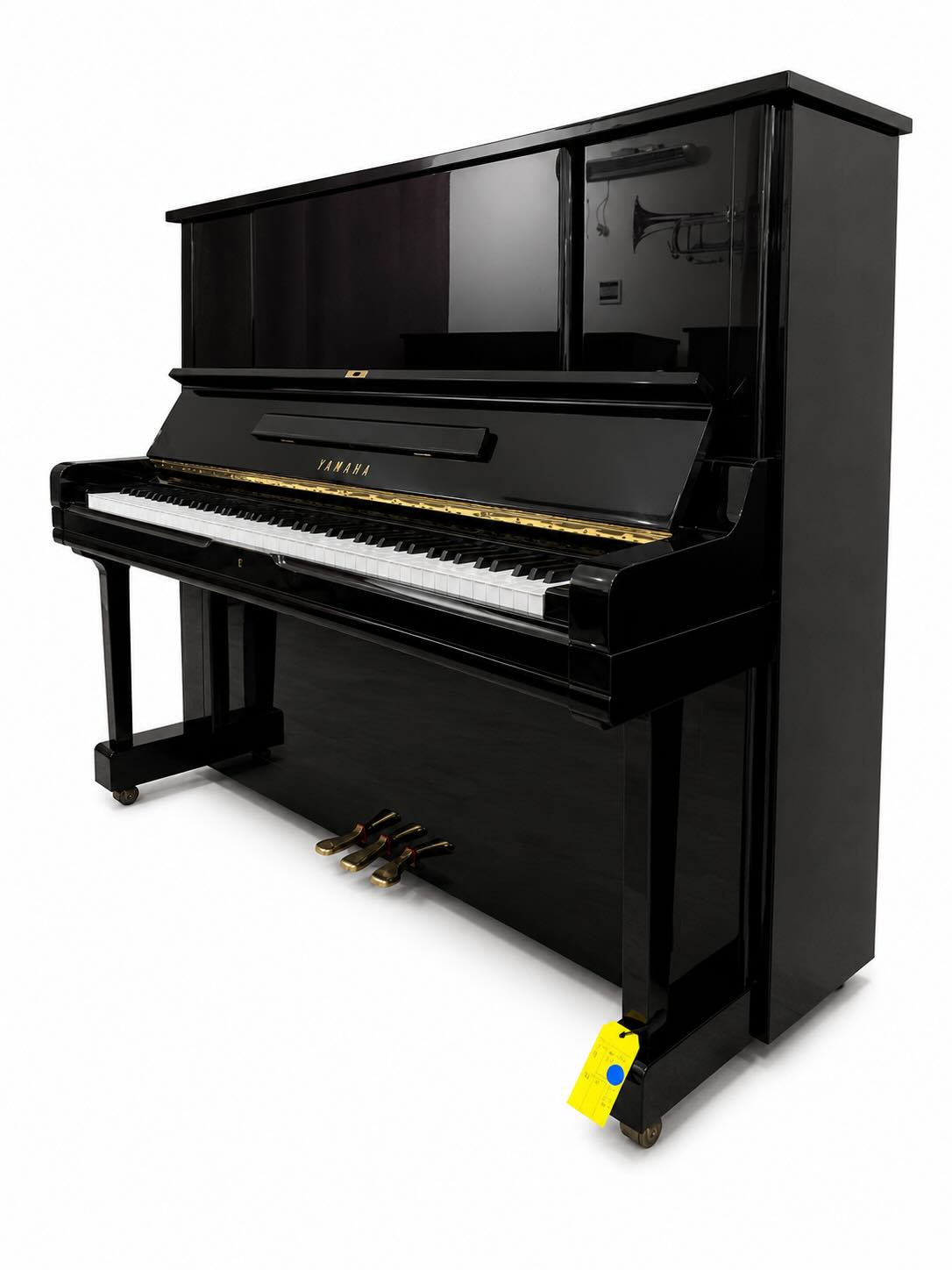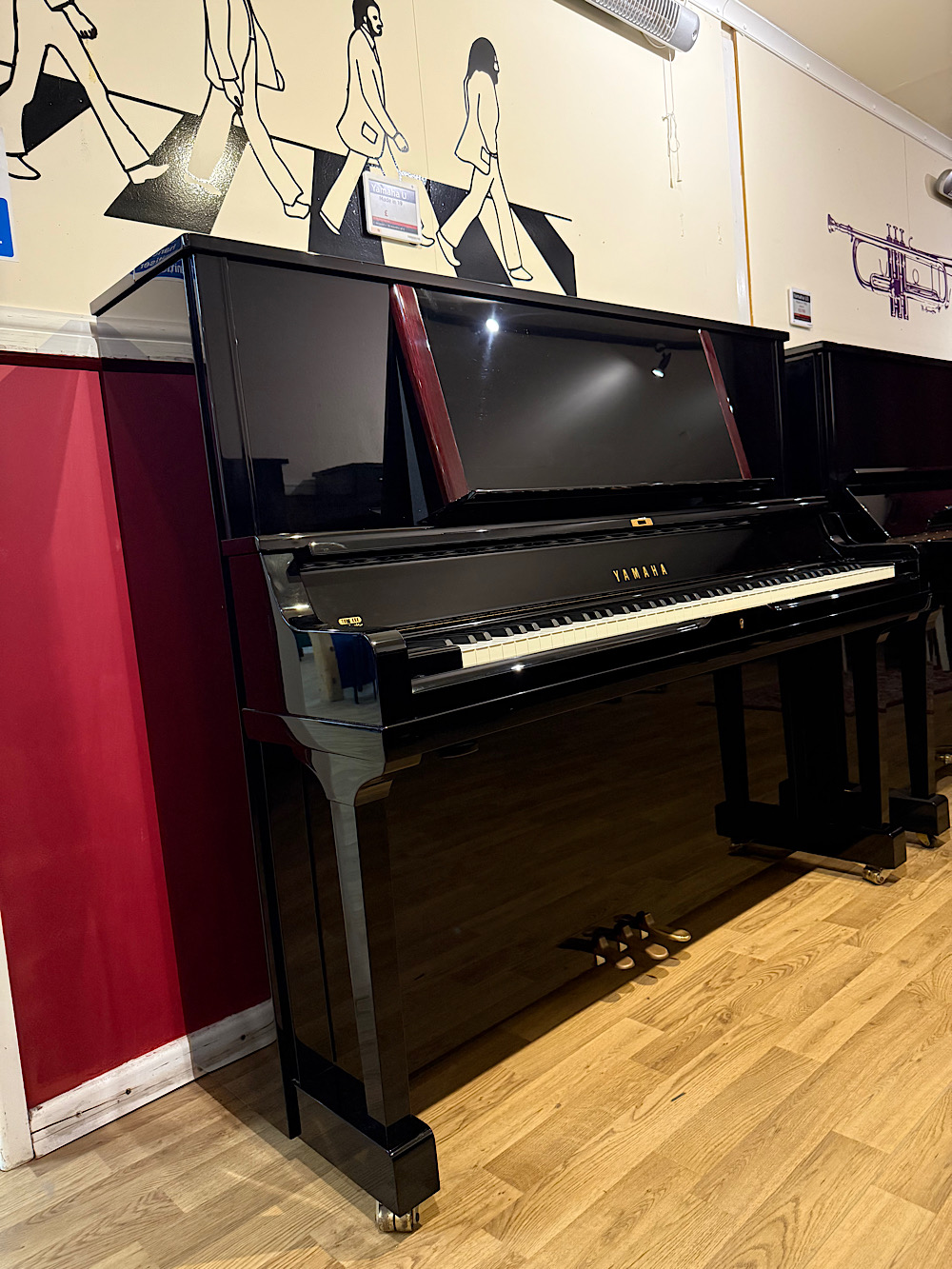


Is the Yamaha U3 Suitable for Professional Musicians?
MY QUICK OPINION: I’d go as far as saying it’s one of the safest piano recommendations you can make. We’ve sold well over 1,000 Yamaha U3s over the years. They now live in the homes of concert pianists, post-graduate students, university lecturers, professional teachers, recording studios and schools. Yamaha certainly make better uprights than the U3 but they are definitely good enough for most professional musicians.

I’ve sold over 1,000 U3s. Here’s what I’ve learnt.
People ask this question all the time.
“Is a Yamaha U3 really good enough for a professional musician?”
Yes! We’ve sold U3 pianos to concert pianists who couldn’t fit a grand piano into their house. We’ve sold them to post-grad conservatoire students. University lecturers. Professional accompanists. Church musicians. Recording studios. Schools. Composers. Musical directors. Pretty much every type of pianist you can think of.
If there was some obvious ceiling where a U3 suddenly wasn’t good enough for professionals, I would have found it by now. That doesn’t mean it’s the best upright Yamaha have ever made, but it does mean that it’s probably the best value professional upright they’ve ever made.
I meet customers who are convinced they need a YUS5 or even an SU7 because they have an ambitious young piano student at home. Then they play a properly prepared U3 for half an hour and realise that it’s good enough.
Would a YUS5 feel a little bti nicer? Yes, but they are twice the price. If you’re budget goes that far, great! If not, enjoy the U3!
So who buys U3 Pianos?
Our experience with these pianos gives us a clear view of their strengths and limitations.
Our customers include:
- Concert pianists
- Post-graduate students
- University lecturers
- Piano teachers
- Professional accompanists
- Church musicians
- Recording studios
- Musical directors
- Composers
- Primary schools
- Secondary schools
- Private boarding schools
One private boarding school bought ten U3s from us in one go.
Recording studios are another interesting one. They don’t just turn up, hit a few notes and buy the first piano they see. We’ve had studios bring their own microphones and recording equipment so they can listen back through proper studio monitors before deciding which piano they want. That tells you something.
Conservatoires use them for a reason
A lot of conservatoires and universities use Yamaha U3s in practice room, not because they’re cheap but because they’re reliable.
Students hammer those pianos all day long. Different players. Different techniques. Different repertoire. They need a piano that can cope with any pianist playing any repertoire without flinching.
Chetham’s School of Music in Manchester is said to have over 100 Yamaha U3s on site for students and staff.
A recording studio hears things differently
Recording studios are brutally fussy and have the keanest ears of all. And they know that a piano might sound lovely sat in front of it, then disappoint once the microphones go up. Do you know the folk band, The Unthanks? They bought a U3 from us for their studio work and also took the piano on tour with them.
Great quality sound, strong as an ox and completely reliable. The U3 ticks those very important boxes.
What professionals actually like about them
- The action is excellent.
- Not “excellent for the money.” Just excellent.
- Long bass strings for tonal depth and resonance
- The middle sings.
- The treble has plenty of life without having to sound bright.
That last point matters becauswe one of the biggest myths about Yamaha U3s is that they’re all bright. They’re not. A badly prepared U3 can sound bright but a well-prepared U3 sounds rich, warm and surprisingly mellow.
When we prepare pianos for our customers, we usually recommend a medium or medium-mellow tone because that’s what most people actually enjoy listening to. So we voice the hammers to produce that tone.
Ironically it’s often the smaller Yamahas like the B1, B10 that people describe as brighter.
Where the U3 does have limits
A good grand piano will always beat a good upright. The repetition is better. The bass has more authority. The tonal palette is broader. So if you’ve got the room and the money for a lovely Yamaha C3 then I’d tell you to buy one.
But here’s where people often go wrong. They’ve got £4000-£6000 to spend and they start looking at tired old grand pianos because they think a grand piano must automatically be better. It usually isn’t. For that money you’re often looking at a tired old ex-school or ex-hire piano that’s had a hard life and needs a full renovation. A U3 is much better than any grand piano in that category.
What about the YUS range?
The YUS3, YUS5 and SU7 are better pianos. The strings are fresh. The hammers are fresh. The refinement is on another level. If you’re practising six hours every day and you notice every tiny detail then yes, they’re worth considering.
But they’re also roughly twice the price of a reconditioned U3 and for most professional musicians I don’t think they’re twice the piano.
Which models would I buy?
Don’t get too hung up on the badge saying U3. The Japanese domestic models are every bit as good and in many cases they’re younger.
I’d happily recommend any of those
- U3A (mid-1980s)
- U30A (late-1980s)
- U30BL (late-1980s)
- YU3 (into the 1990s)
- U300 (90s)
- UX30A (upgraded U30A)
- UX30BL (upgraded U30BL)
Those are all excellent pianos that we’ve sold hundreds of. They are very consistent from one example to the next.
The U3A is one of my favourites because they’re so consistently good, lots of them available and the price is still quite low.
Older U3H models can sometimes sound a little softer in the bass, although there are still plenty of lovely examples around. Just make sure you play the bottom 2 octaves during your testing and NEVER buy one off ebay as they will not be telling you if the bass strings are too tired. They will just cross their fingers and hope that you don’t notice.
So would I recommend one? Yes of course and if you’re serious about buying a Yamaha U3, don’t spend weeks reading forums or asking for opinions on Facebook groups. Go somewhere that has several lined up together and play them back to back. Stay 2 hours and wait for the right piano to speak to you.
That’s exactly why we keep so many in stock. Bring your music books, bring your piano teacher if you like. Stay all day and come back for multiple visits if you like but you’ll know very quickly whether a Yamaha U3 is the right piano for you. I’ve been buying U3s for 20+ years and it only takes me 5 seconds to asses them these days.
See our current stock of U3 pianos below and U3 Premium Pianos and drop us a line if you have any questions
Many thanks
Mark
Yamaha U3
The most popular high-end acoustic piano of the last 50+ years. We currently have 2 in stock.

Yamaha U3 Premium
An upgraded version of the U3 with higher-grade internal materials. We currently have 2 in stock.