


Japanese vs Chinese Pianos: Why the Quality Gap Is Real
QUICK ANSWER: Japan builds pianos with incredible care and precision, using skills passed down and refined over a hundred years. China’s modern piano industry is much younger, built for volume and low prices, and it shows in tuning stability, how consistent the keys feel, and how long the piano lasts. Many experienced piano technicians who have worked extensively on both reach the same conclusion.
Why Build Quality Matters
Years ago we ordered a batch of acoustic guitars from a Chinese factory. None of them stayed in tune for more than a few seconds. By the time I had tuned the top E, the low E was flat again. Now picture that same manufacturing approach on a piano with 12,000 parts and 18 tons of tension pulling against it.
Japan has been building high-quality acoustic pianos for over a century. The workforce is highly specialised, quality control is deeply embedded in the manufacturing culture, and the Japanese market has always demanded particularly high standards. You can’t copy a hundred years of that by opening a new factory.
Why Pianos Show Every Mistake
If you build a chair slightly wonky, few people would notice, but if you do the same with a piano, you’ll hear it, feel it, and notice it every time you play. The soundboard must be crowned to extremely precise tolerances so that it vibrates evenly across its surface, and every part of the action has to be cut to precise tolerances, or the keys will feel uneven. You can hear and feel manufacturing shortcuts even if you don’t know the cause.
Why the Japanese Models Cost More
The extra cost isn’t simply higher wages. Premium Japanese models generally use better materials, receive more time during manufacture and regulation, and undergo stricter quality control before leaving the factory. It’s why these pianos still play well after 40 or 50 years.
Yamaha: Where Each Model Actually Comes From
The full breakdown is in the table below, but a few things are worth knowing before you look at it.
The B10 is around 11cm shorter than a U1, giving it shorter bass strings and a smaller soundboard, and uses a “spruce core” soundboard rather than the U1’s solid spruce. Shorter strings and a smaller soundboard usually produce a less rich or resonant tone. Full comparison here: buy a Chinese Yamaha B10 or Japanese Yamaha U1.
Yamaha’s own website also makes this harder to check than it should be. A serial number starting with “H” or “J” means China or Indonesia. A model number ending in H or J means Japan. Same letter, opposite meaning. We’ve had a customer nearly reject a genuinely Japanese U1H over this exact mix-up: is the Yamaha U1H made in Japan or China and Indonesia or Japan, where is the Yamaha G2 made.
And before you assume a new B10 is the safe choice just because it’s new: why a Japanese U1 or U3 beats a new B1 or B10 is worth a quick read.
If Yamaha is the brand you’re focused on, our full Yamaha buying guide covers the full range in more depth.
Kawai: Where Each Model Comes From
Kawai’s line-up is less clean than people assume, so it’s worth being specific rather than just saying “Kawai builds in Japan.” The K300 is the one to watch: it’s made in either Japan or Indonesia depending on the market it’s sold into, so the same model number doesn’t guarantee the same factory. If you’re buying one specifically because you want Japanese build quality, it’s worth asking the dealer to confirm where that individual piano came from.
The K200 also has shorter keys, a smaller soundboard, and fewer soundboard ribs than the K300 sitting just above it. It’s a genuinely well-regarded piano for its size and price, but it isn’t the same instrument as a Ryuyo-built K500.
What This Means When You’re Buying
| Model | Built in | Notes |
|---|---|---|
| Yamaha U3 | Japan | Always built in Japan. |
| Yamaha U1 | Usually Japan | Check the serial number to confirm. |
| Yamaha B10 | China | Entry-level model with shorter strings and smaller soundboard. |
| Yamaha B1 | Indonesia | Now discontinued. |
| Yamaha UX / U30A / U30BL / YU | Japan | Premium upright models. |
| Yamaha G1 / G2 / G3, C1 / C2 / C3 | Japan | Grand pianos, always Japan. |
| Kawai K500 / K600 / K800 | Japan | Premium uprights built at Ryuyo. |
| Kawai K300 | Japan or Indonesia | Country varies by market. Always check. |
| Kawai K200 | Indonesia | Entry-level upright. |
| Shigeru Kawai | Japan | Hand-built flagship range. |
Across both Yamaha and Kawai, the same pattern emerges: the premium models are built in Japan, while the entry-level ranges are made in China or Indonesia
Country of manufacture isn’t everything of course. A neglected Japanese piano can be worse than a well-maintained Chinese one, but if you’re comparing two pianos of similar age and condition, we’d choose the Japanese one every time. It’s generally built to higher standards, holds its value better (a reconditioned 1970s U1 often sells for close to the price of a brand-new B10, whose value typically falls much faster).
So if you find yourself in a piano shop being drawn to a particular model, don’t forget to pause and check where it was made. It’s one of the most important things to check.
If you want the full version of everything we know about buying the right piano, we’ve put years of it into one document, the same thing we hand to anyone who walks into the shop asking where to start. Download our free piano buyer’s guide here.
And finally, for a flavour of our own Japanese pianos, please see our current stock of Yamaha U3 pianos listed below or view our full list of pianos for sale
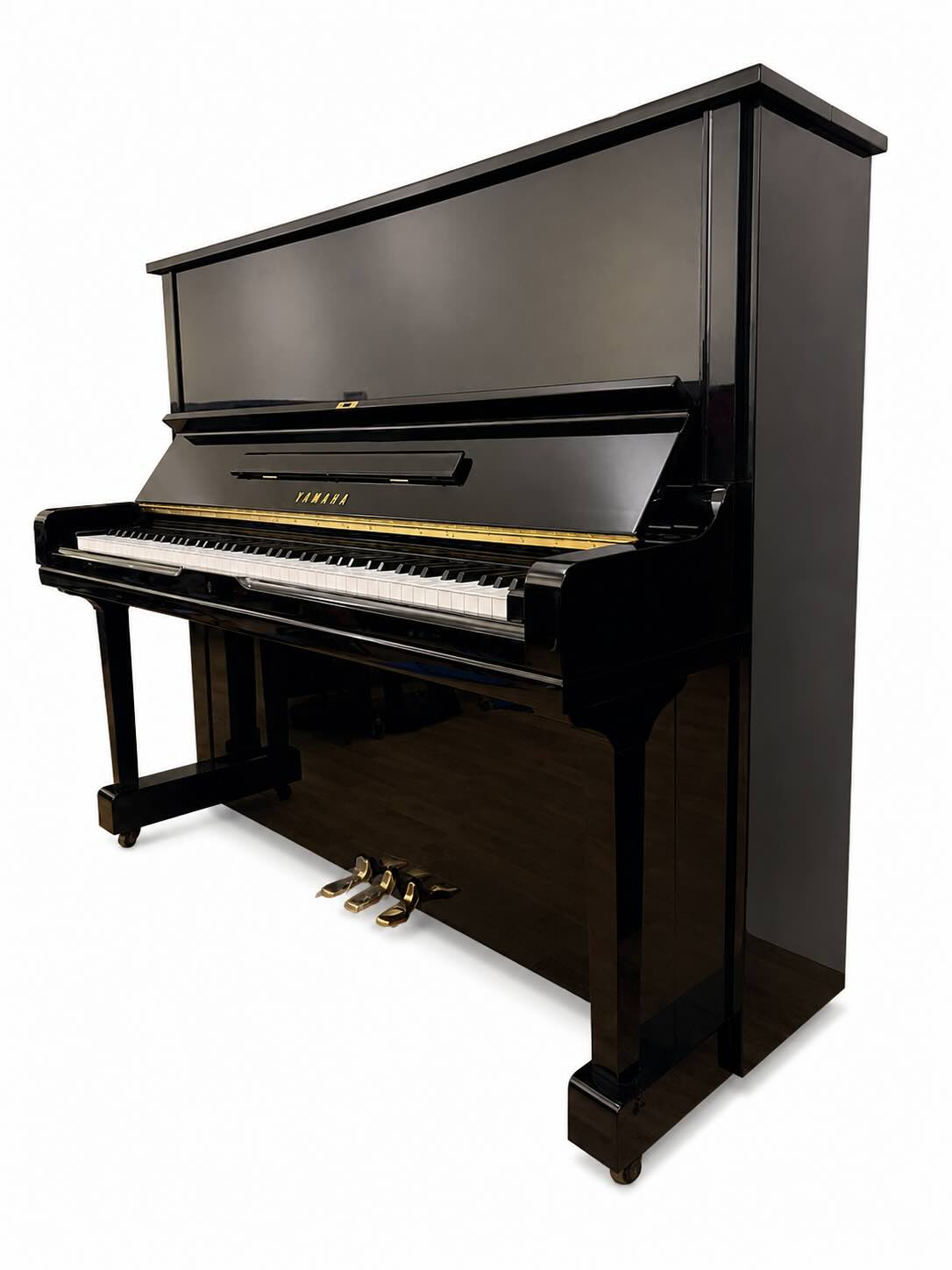
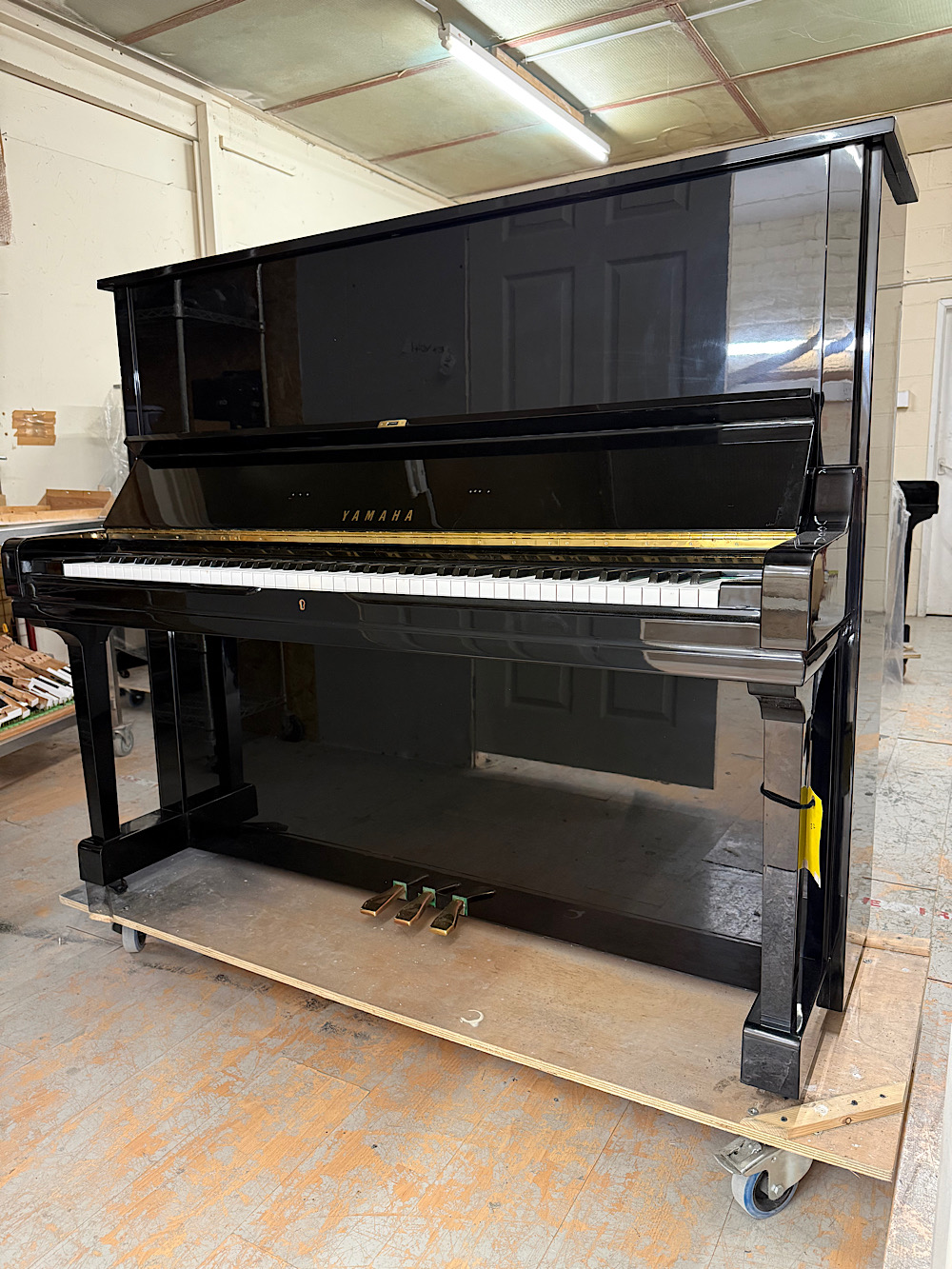
Yamaha U3
The most popular high-end acoustic piano of the last 50+ years. We currently have 2 in stock.
-
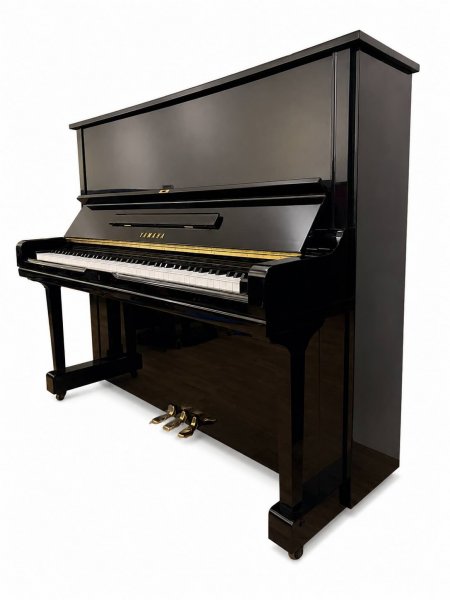 1975, 1963xxxThis Yamaha U3 was listed on 14 February 2026. It was imported from Japan. It comes with free UK delivery and a lifetime warranty. For 0% finance you need a £469 deposit followed by 18 payments of £234.50.£4690 0% finance, £469 deposit then 18 payments of £234.50 London London
 Photo
Reserve with a 10% refundable deposit
Photo
Reserve with a 10% refundable deposit
-
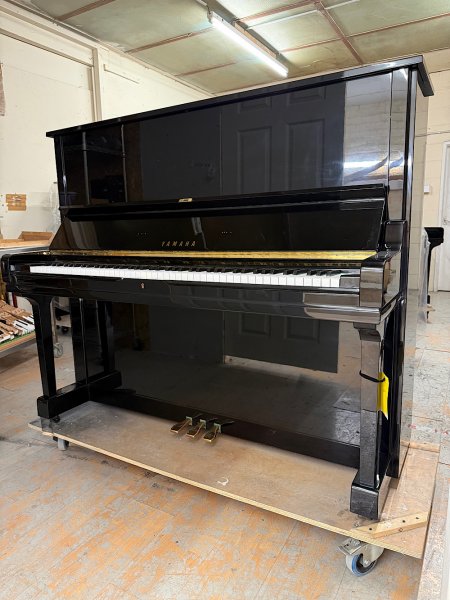 1982, M 3496xxxThis Yamaha U3 was listed on 3 October 2026. This piano was sourced from a UK home. It comes with free UK delivery and a lifetime warranty. For 0% finance you need a £489 deposit followed by 18 payments of £244.50.£4890 0% finance, £489 deposit then 18 payments of £244.50 Manchester ManchesterPhoto
Reserve with a 10% refundable deposit
1982, M 3496xxxThis Yamaha U3 was listed on 3 October 2026. This piano was sourced from a UK home. It comes with free UK delivery and a lifetime warranty. For 0% finance you need a £489 deposit followed by 18 payments of £244.50.£4890 0% finance, £489 deposit then 18 payments of £244.50 Manchester ManchesterPhoto
Reserve with a 10% refundable deposit
Created: 08 July 2026
Modified: 31 July 2026