


Kawai Piano Review (2026 Guide)
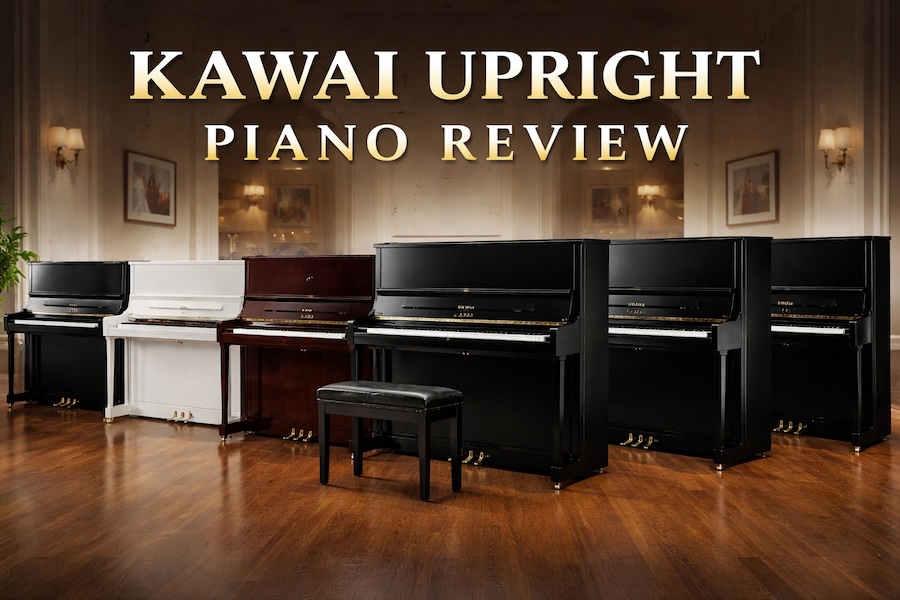
If you’re researching Kawai pianos, you’re already looking at one of the safest choices in the market.
Alongside Yamaha, Kawai is one of the few brands that consistently produces reliable, well-built pianos with long-term value. In our experience (over 20+ years in the trade), if you stick to either of these two manufacturers, you’re unlikely to make a bad decision.
This guide covers the key Kawai upright models:
K-15E, K-200, K-300, K-500, K-600, K-700 and K-800AS
We’ll give you a clear, practical breakdown—no brochure fluff.
Quick Overview: Are Kawai Pianos Good?
Yes, Kawai pianos are very good!
Kawai pianos are:
- Extremely well made
- Reliable long-term
- Consistent in quality
- Often slightly warmer in tone than Yamaha
- Featured in our best upright piano article
Where buyers sometimes hesitate is resale value and familiarity. In most of England (Manchester, London especially), Yamaha tends to be the default choice and often sells faster on the used market.
That doesn’t make Kawai worse but it does affect real-world buying decisions.
Important Buying Rule (Don’t Skip This)
Before looking at specific models:
Avoid small uprights under ~120cm.
Shorter pianos:
- Have less tonal depth
- Shorter keys (less control)
- Less room to grow musically
This applies to all brands.
A proper starting point for serious playing is:
- Kawai K-200 / K-300
- Yamaha U1 (121cm)
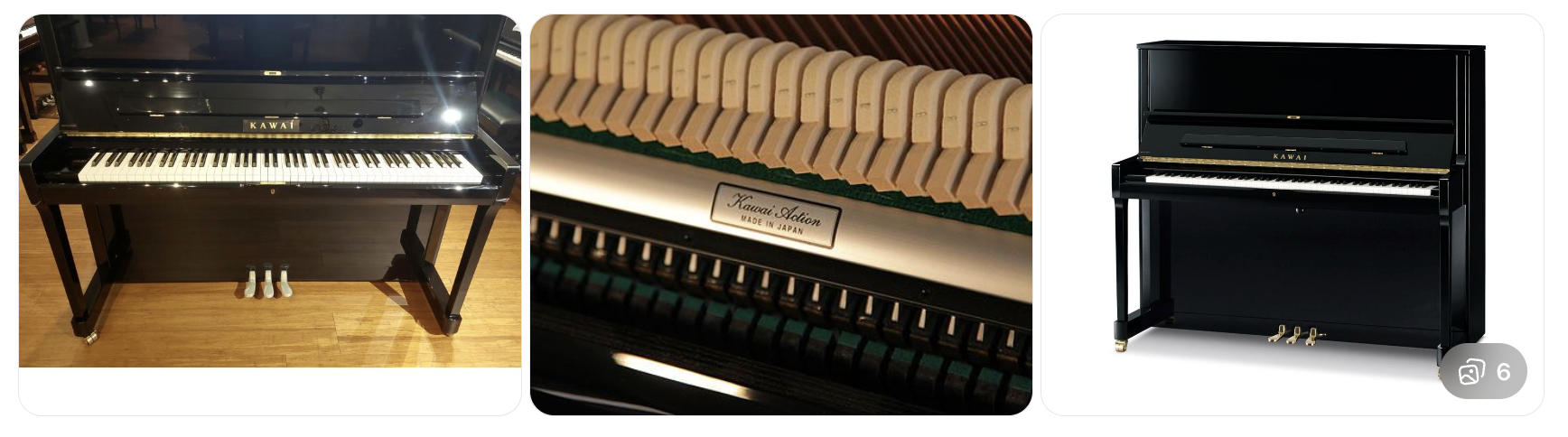
Kawai K-15E Review
Pros
- Compact size
- Affordable
- Solid build for the price
Cons
- Limited tonal depth
- Not ideal for advancing players
We’ve had a Kawai K-15E in stock recently. See that link for photos and videos.
Realistically, the K15 sits closer to something like a Yamaha B1. Fine for beginners, but if you’re even slightly ambitious, you’ll outgrow it quickly.
Better move: stretch to a 121cm piano (K-200 / U1).
Kawai K-200 Review
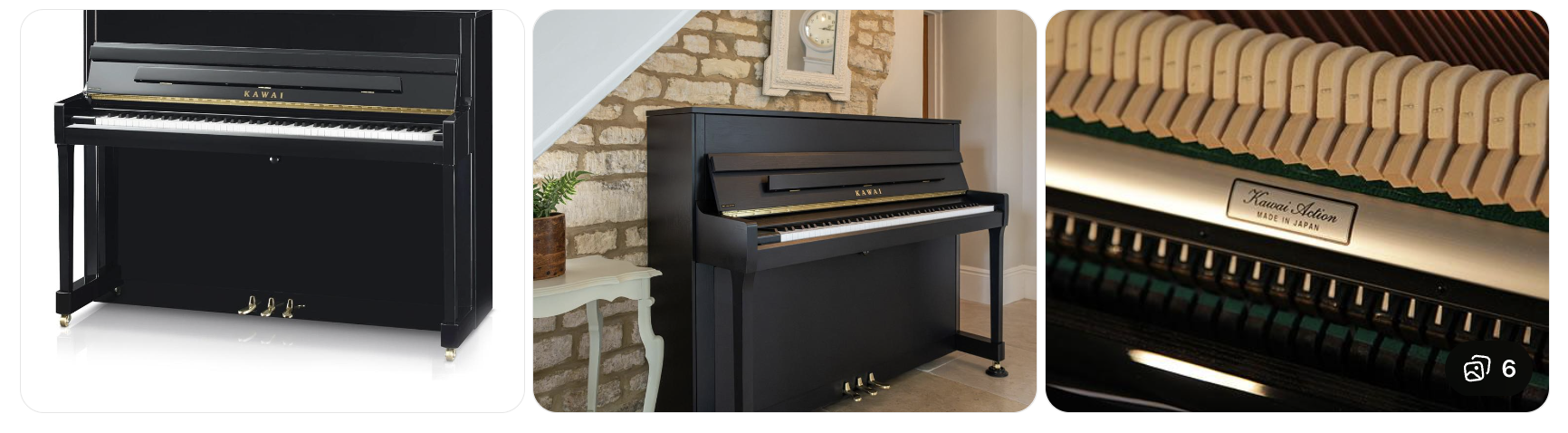
This is where things step up.
Height: 114cm
What it does well
- Balanced tone
- Solid build quality
- Good for intermediate players
Limitation
Still slightly on the shorter side. You don’t quite get the depth and power of a full-size upright.
Verdict:
Good—but if you can stretch slightly, the next model up is noticeably better.
Kawai K-300 Review
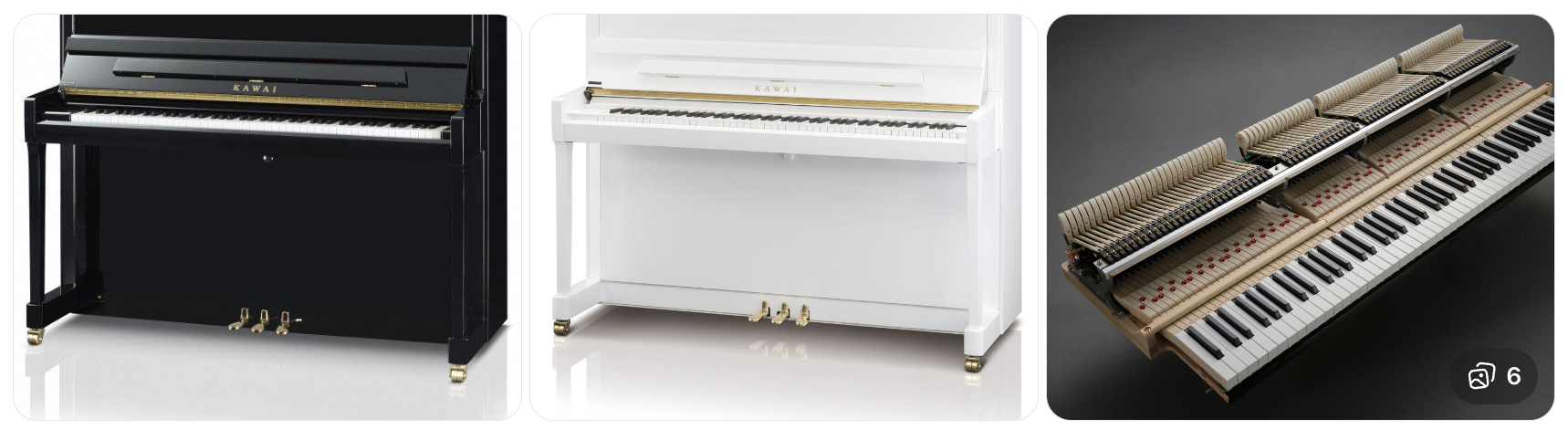
Height: 122cm
This is the point where most serious players should be starting their search.
Why it’s popular
- Strong tonal depth
- Better key length → more control
- Suitable for long-term use
- Above 120cm tall = long strings and good depth of tone
We had a K-300 with Kawai’s AURES system (see photos and video on that link)
It was a lovely piano. The interesting thing: buyers were slightly put off because it wasn’t the latest version of the digital system, even though the acoustic piano itself was excellent and obviously very young.
That’s a key point:
Digital systems date quickly. The acoustic piano doesn’t.
If you want silent practice, a Yamaha U1 or Kawai K200 or K300 with a modern Silent/Adsilent system often makes more long-term sense.
Kawai K-500 Review
Height: 130cm
Improvements over K-300
- Bigger soundboard
- More projection
- Richer bass
- Full-size upright just like the 131cm Yamaha U3
This is where upright pianos start to feel closer to small grands in performance.
Kawai K-600 Review
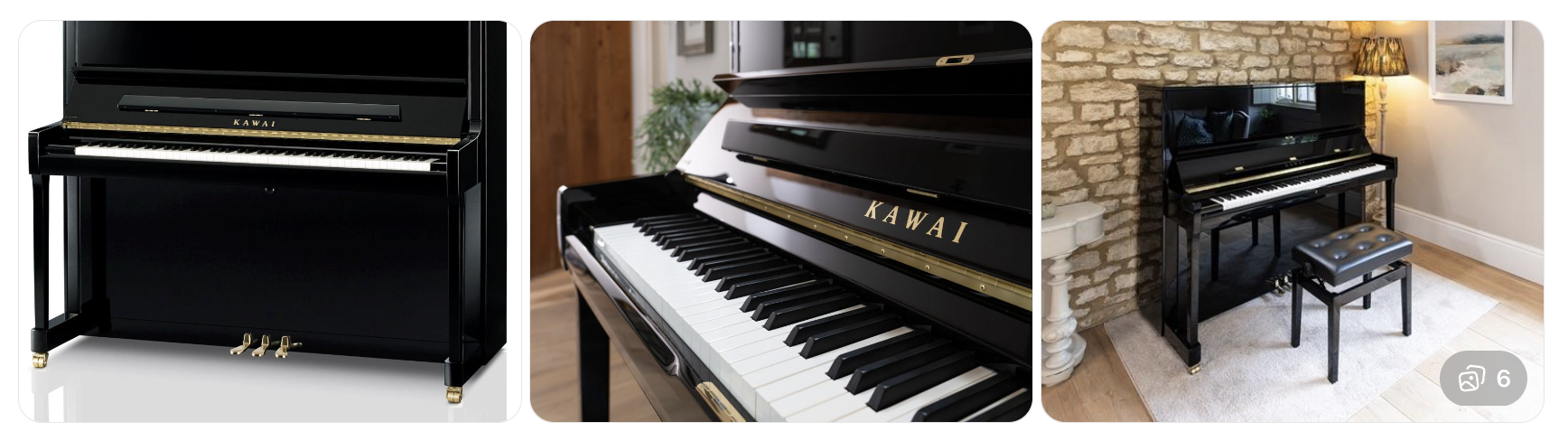
Height: 134cm
A step up again in refinement.
- More dynamic range
- Greater tonal complexity
- More responsive action
- Very tall piano. Nice long strings
At this level, differences become more about feel and personal preference.
Kawai K-700 & K-800AS Review
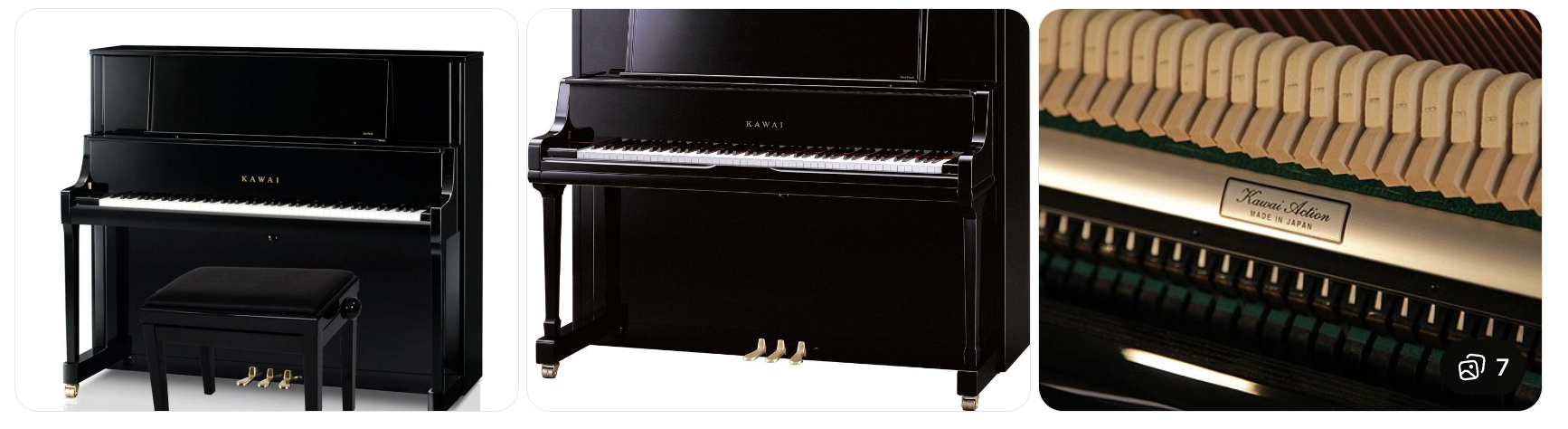
These are Kawai’s top upright models.
K-700
- Powerful, expressive
- Often compared with Yamaha U3
K-800AS
- Premium materials
- Slightly more refined tone
- Hybrid features available
At this level, you’re choosing between two excellent instruments rather than right vs wrong.
Kawai vs Yamaha (Real-World View)
From experience:
Kawai
- Slightly warmer tone initially
- Sometimes a slightly heavier action
- Excellent build quality
Yamaha
- Brighter tone (but easily softened by voicing)
- Very consistent feel
- Strong resale demand
In practice, in our showroom, many customers visit specifically to see Kawai and leave with a Yamaha.
Not because Kawai is worse, but because Yamaha tends to feel more familiar and slightly easier to play. A good technician could set either up to feel very similar.
Final Advice (What Should You Actually Buy?)
If you want a simple rule:
- Avoid small pianos under 120cm
Start your search at:
- Kawai K-300
- Yamaha U1 (121cm)
If you have more budget and space:
- Kawai K-500 / K-600
- Yamaha U3
Both routes are excellent—just make sure:
- It’s Japanese-made
- It’s tall enough (120cm+)
- You buy on condition, not just brand
Bottom Line
Kawai pianos are excellent. Reliable, well built, and musically capable. If you really want a Kawai, go for it, you’ll be very happy.
But in the real world:
- Yamaha often edges it on familiarity and resale value
- Buyers tend to gravitate that way over time
If you’re comparing Kawai and Yamaha side by side, it’s always worth seeing and playing both in person.
If you have any questions about this article please email hello@markgoodwinpianos.co.uk
Many thanks
Mark
p.s. Kawai isn’t the only brand splitting production between Japan, Indonesia and China. See how Yamaha and Kawai compare on manufacturing location for the full picture.
Created: 31 March 2026
Modified: 24 July 2026